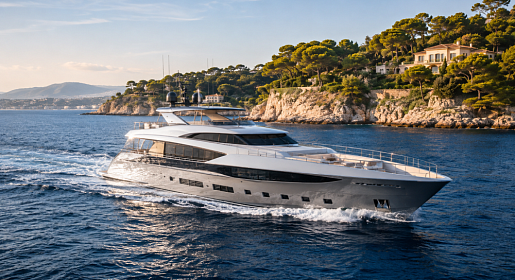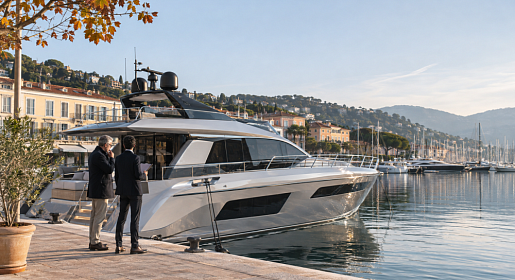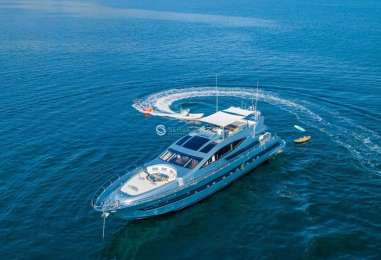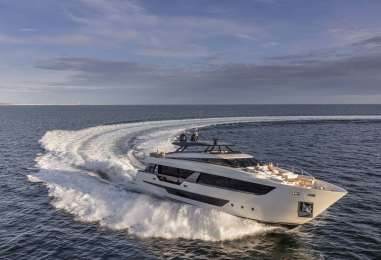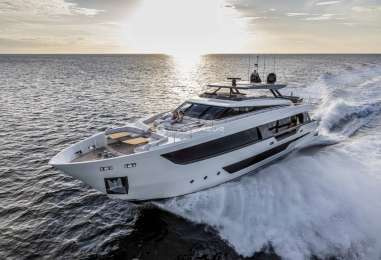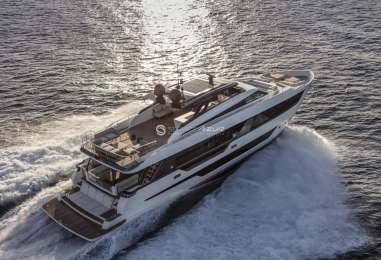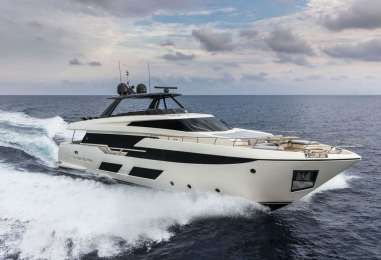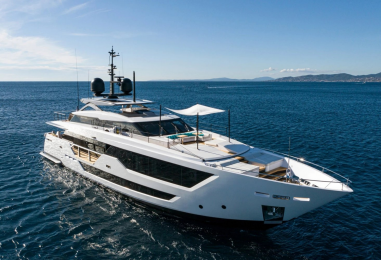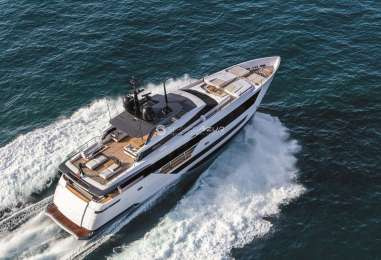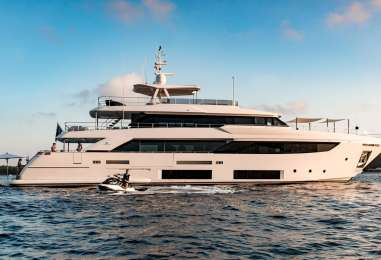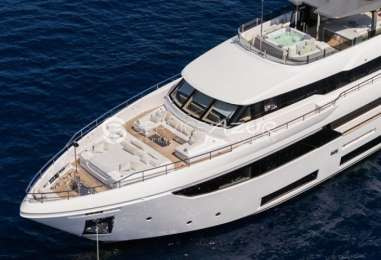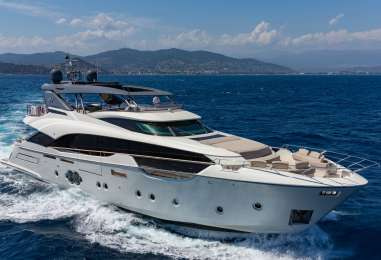
A yacht can look immaculate in photographs and during a dockside viewing while still requiring significant technical work.
For that reason, a serious yacht acquisition normally goes beyond broker presentations and visual inspection. Before making a final decision, the buyer should obtain a much clearer technical picture of the vessel.
Two of the most important stages are the pre-purchase survey and the sea trial. They are closely connected, but they serve different purposes.
What Is a Pre-Purchase Survey?
A pre-purchase survey is a technical inspection commissioned by the buyer and carried out by an independent marine surveyor.
Its purpose is to assess the yacht’s condition and identify issues that may affect safety, operation, value or future expenditure.
This is particularly important with a pre-owned yacht, where exterior presentation does not necessarily reveal the condition of the structure, machinery or onboard systems.
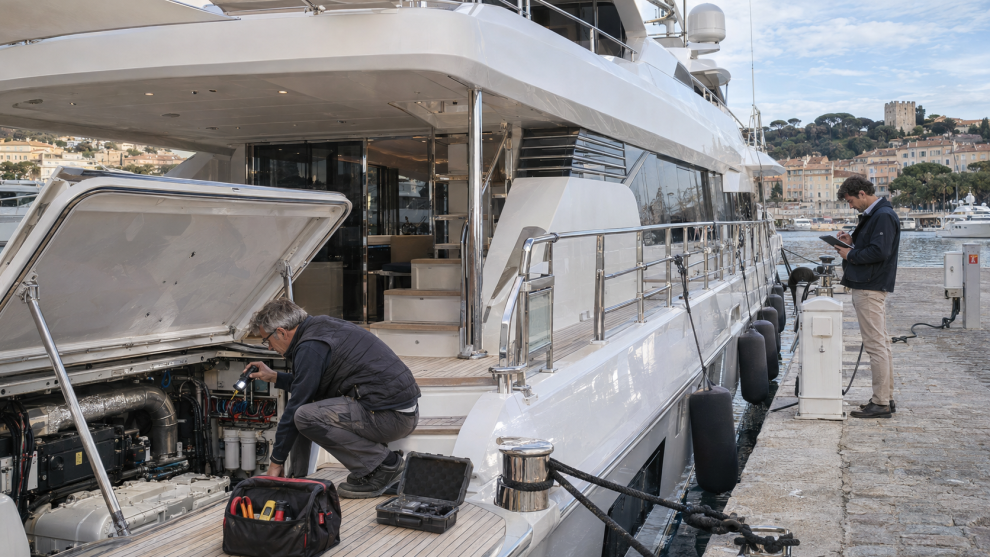
The exact scope should be agreed with the surveyor before the inspection begins. A standard condition survey does not automatically involve dismantling machinery or opening structural components: many items are inspected visually and on a non-intrusive basis unless additional work has specifically been agreed.
What Does the Surveyor Inspect?
The scope depends on the yacht’s type, size, age and complexity.
For a motor yacht, it can include:
- hull and structural condition;
- decks and superstructure;
- propellers, shafts, rudders and stabilisers;
- main engines and generators;
- electrical installations;
- fuel systems and tanks;
- fresh-water and plumbing systems;
- HVAC and ventilation;
- navigation equipment;
- safety equipment;
- anchoring and mooring equipment;
- tenders and associated systems where included in the agreed scope;
- available technical documentation.
On a sailing yacht, separate inspection of the mast, rigging and sails may also be appropriate.
Why Independence Matters
The surveyor should represent the buyer’s technical interests.
A broker can help identify suitable professionals and coordinate access to the yacht, shipyard, haul-out and sea trial, but the final choice of surveyor should remain with the buyer.
This separation is important because the technical findings may influence whether the transaction proceeds.
The purpose of the survey is not to find as many defects as possible for negotiation. It is to give the buyer an objective understanding of the yacht.
Documentation Is Also Part of Due Diligence
The yacht’s physical condition is only one part of the review.
The surveyor may examine available technical documentation, service records, equipment certificates and other material relevant to the yacht’s condition.
Separately, the legal and documentary due-diligence process should establish the seller’s title, the yacht’s registration position and the documentation required for transfer.
Technical and legal due diligence complement one another, but they are not interchangeable.
Why Is the Yacht Hauled Out?
Some of the yacht’s most important components cannot be properly examined while the vessel remains afloat.
For this reason, many pre-owned yacht transactions include a haul-out.
Once the yacht is out of the water, the surveyor can inspect areas such as:
- the underwater hull;
- propellers;
- shafts;
- rudders;
- stabilisers;
- anodes;
- through-hull fittings and sea connections;
- other underwater equipment.
On GRP yachts, moisture readings and other tests may be appropriate where included within the agreed scope.
Metal yachts can require different specialist measurements depending on construction and condition.
What Does the Sea Trial Add?
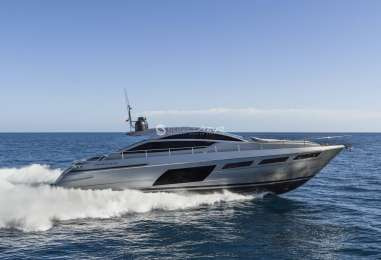
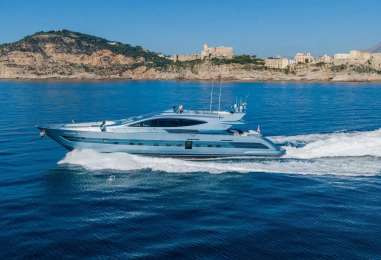
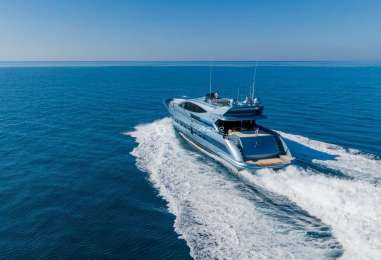
A sea trial evaluates the yacht while it is operating.
A system that appears normal at the dock may behave very differently when placed under load.
During the trial, the technical team can observe:
- main engine performance;
- temperatures and pressures;
- vibration;
- steering;
- stabilisers;
- noise levels;
- generator and other system performance under load;
- the yacht’s behaviour at different speeds.
For the buyer, the sea trial also provides a practical impression of the yacht: acceleration, visibility from the helm, noise, movement underway and overall cruising comfort.
A Survey and a Sea Trial Are Not the Same Thing
A sea trial does not replace a technical survey.
It shows how the yacht performs underway, but it cannot provide a complete inspection of every structural and technical component.
Equally, a detailed dockside and haul-out inspection cannot fully demonstrate how the engines, stabilisers and yacht itself perform under operating load.
The two stages should therefore be treated as complementary.
When Are Specialist Inspections Needed?
A general marine surveyor is not necessarily the specialist for every individual piece of machinery onboard.
For complex or high-value systems, additional specialist inspection may be recommended.
Depending on the yacht, this can include:
- main engine inspection;
- generator inspection;
- electronic engine diagnostics;
- laboratory oil analysis;
- stabiliser inspection;
- paint assessment;
- specialist electrical checks;
- mast and rigging inspection on sailing yachts.
For the main engines, a technician familiar with the particular manufacturer and model can provide useful additional information.
Why Does Service History Matter?
The survey shows the condition of the yacht at a particular moment, while the maintenance history helps explain how that condition was reached.
It is useful to review invoices and service records for engines, generators, stabilisers, HVAC, electronics and other major systems.
Regular documented maintenance usually gives a buyer more visibility over future expenditure than a yacht with an incomplete technical history, even where both vessels present equally well during a viewing.
What Does the Survey Report Contain?
After the inspection, the buyer receives a technical report.
It may identify anything from minor maintenance points to significant defects or matters requiring additional investigation.
It is important to distinguish between cosmetic observations, routine maintenance and defects that affect safety, seaworthiness or the operational integrity of systems and machinery.
The report therefore helps not only with the acquisition decision, but also with creating a realistic programme of future works.
How Can the Survey Affect the Transaction?
There is no automatic rule that every survey finding produces a price reduction.
The commercial consequences depend on the sale and purchase agreement and on the nature of the issues discovered.
Depending on the contractual framework, the buyer may:
- accept the yacht in its existing condition;
- discuss remediation of particular issues;
- renegotiate commercial terms;
- commission further investigation;
- withdraw from the transaction where the agreement permits.
In the professional large-yacht market, agreements including widely used MYBA forms contain defined procedures and deadlines relating to the survey, sea trial and the buyer’s subsequent decision.
It is therefore important to understand the contractual process as well as the technical one.
Allow Enough Time
A proper technical review should not be rushed.
Access to the yacht, surveyor availability, shipyard scheduling, haul-out, specialist attendance and suitable sea-trial conditions all need to be coordinated.
Weather can also affect the sea trial.
Winter can be a useful time for technical due diligence, particularly when a yacht is already in a yard or undergoing seasonal works, but poor conditions can also delay the trial.
Technical due diligence should therefore be built into the acquisition timeline rather than treated as a final administrative step immediately before payment.
The Objective Is to Understand the Yacht Before Buying It
A pre-purchase survey and sea trial cannot guarantee that a yacht will never develop a technical problem.
Their purpose is to give the buyer the clearest practical picture possible of the vessel’s condition at the time of acquisition, identify potential risks and improve the accuracy of future expenditure planning.
For further guidance on yacht acquisition and ownership, visit the Yacht ServiceAzur articles section.
Yachts for Sale
When considering a yacht, design, layout and equipment are only part of the decision. Its actual technical condition is equally important.